Archives: News

  • Drake and Adin Ross Face Fresh Legal Trouble as Stake Lawsuit Escalates in 2026

    Drake and Adin Ross Face Fresh Legal Trouble as Stake Lawsuit Escalates in 2026

    The legal pressure surrounding Drake and Adin Ross’ promotion of Stake has intensified. A new federal class-action lawsuit filed in Virginia on December 31, 2025, marks the latest chapter in a controversy that first surfaced last year.

    This filing follows two earlier lawsuits from October 2025, where both Drake and Ross were accused of promoting illegal online gambling. The new complaint significantly expands the allegations and raises the stakes for all parties involved.

    Plaintiffs Accuse Stake of Running an Illegal Online Casino

    According to the lawsuit reviewed by Complex, plaintiffs LaShawnna Ridley and Tiffany Hines claim that Stake has operated as “one of the largest and most profitable illegal online casinos” since at least 2022.

    The complaint alleges that Stake misleads users by marketing itself as a free social gaming platform. Stake reportedly claims it does not offer real-money gambling and that no purchase is required to play.

    However, the lawsuit argues otherwise.

    Plaintiffs state that users must buy Gold Coins, which are always bundled with Stake Cash. This Stake Cash can allegedly be redeemed one-to-one for U.S. dollars, effectively turning virtual gameplay into real-money wagering.

    Drake and Ross Labeled Paid and “Zealous” Promoters

    The lawsuit describes Drake and Adin Ross as paid promoters who actively encouraged gambling on the platform. It alleges that both celebrities streamed high-stakes gambling sessions using money secretly provided by Stake.

    According to the filing, viewers were led to believe the wagers were personal funds. In reality, the complaint claims the money came directly from the platform.

    This accusation mirrors claims made in the October 2025 lawsuits but adds new detail and context.

    Explosive Claims of Money Transfers and Botting

    One of the most sensational allegations involves Stake’s internal “tipping” system. The lawsuit claims this system was used to move large sums of money between Drake, Ross, and another defendant.

    The complaint even references a public $100,000 tip exchanged between Drake and Ross. Plaintiffs allege these funds were used to finance artificial streaming and botting of Drake’s music.

    The lawsuit claims this activity aimed to fabricate popularity, manipulate algorithms, and distort streaming metrics while hiding the flow of funds.

    What Happens Next

    Both plaintiffs say they lost money after being misled and are seeking damages, penalties, and an injunction to stop the conduct.

    Drake, who reportedly signed a $100 million endorsement deal with Stake in 2022, has not commented publicly. Ross previously dismissed similar lawsuits as “bullshit” during a livestream.

    With multiple cases now active, the legal spotlight on celebrity iGaming promotions continues to grow in 2026.

  • Rush Street Interactive Stock Surges 41%, Sets Strong Tone for 2026

    Rush Street Interactive Stock Surges 41%, Sets Strong Tone for 2026

    Rush Street Interactive (RSI) has delivered one of the strongest stock performances in the gambling sector this year. The company’s shares have climbed by nearly 41% in 2025, positioning RSI as a leading iGaming stock heading into 2026.

    Industry analysts and investors are taking notice. According to coverage by Casino.org, the rally reflects rising confidence in the company’s disciplined growth strategy and long-term vision.

    Strong Market Presence Drives Growth

    Rush Street Interactive operates well-known brands such as BetRivers and PlaySugarHouse. These platforms perform strongly in regulated U.S. markets where online casino and sports betting adoption continues to grow.

    RSI has also built a solid footprint in Latin America. Markets like Colombia and Mexico contribute steadily to revenue. This regional diversification helps reduce risk and supports consistent performance.

    Focus on Efficiency Over Aggressive Spending

    Unlike many competitors, RSI avoids excessive marketing spend. The company focuses on player retention, product quality, and operational efficiency. This approach improves margins and strengthens long-term sustainability.

    Management prioritizes responsible gambling tools and localized experiences. These factors help build trust and long-lasting player relationships. Investors see this strategy as a key differentiator.

    Regulatory Readiness Supports Investor Confidence

    Regulatory expansion remains a major theme across the global iGaming industry. Rush Street Interactive benefits from deep experience in compliant markets. Its technology and operational frameworks allow faster entry into new regions.

    As more jurisdictions consider legalizing online gambling, RSI stands ready to scale. This readiness supports positive sentiment around the stock moving into 2026.

    Innovation Remains a Key Priority

    Rush Street Interactive continues to invest in innovation. The company enhances casino content, improves mobile performance, and uses data-driven personalization. These upgrades aim to boost engagement and lifetime player value.

    Analysts believe these initiatives could support further growth in the coming year. If momentum continues, RSI may strengthen its position among top-tier gambling operators.

    Outlook for 2026

    With a 41% stock increase and improving fundamentals, Rush Street Interactive enters 2026 on solid footing. The company combines steady execution with regulatory expertise and scalable technology.

    As investor focus shifts toward sustainable iGaming leaders, RSI remains one of the most closely watched gambling stocks in the market.

  • Gambling Firms Spent Millions on Ads Despite London Ban Pledge: Regulators Under Fire

    Gambling Firms Spent Millions on Ads Despite London Ban Pledge: Regulators Under Fire

    Advertising & Regulation News

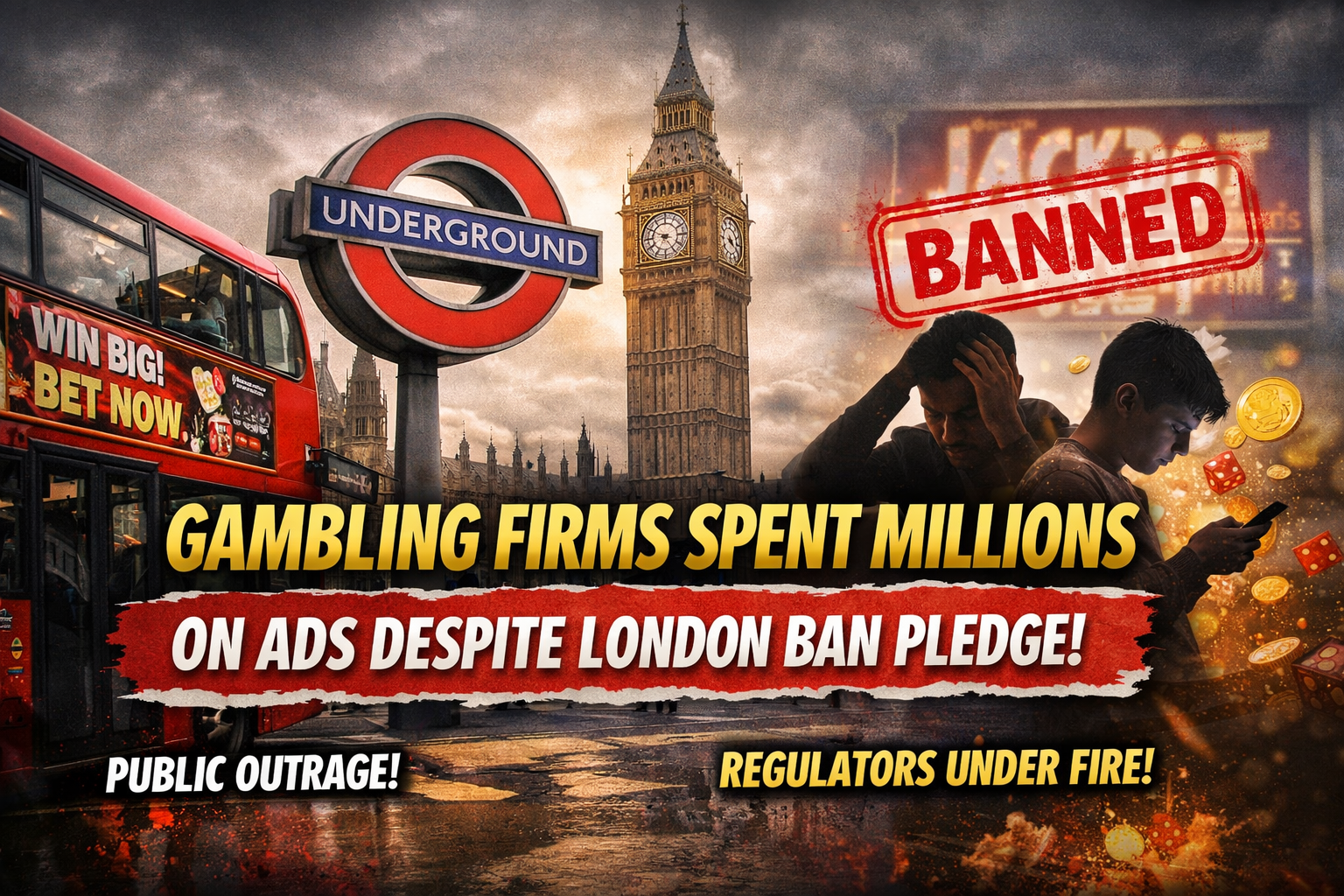
    The UK gambling industry is once again at the center of controversy after fresh reports revealed that gambling companies spent nearly £5 million on advertising across Transport for London (TfL)despite a public pledge by the London mayor to ban such promotions.

    According to an investigation by The Guardian, gambling advertisements have continued to appear across London’s transport network, including buses, stations, and digital screens, even after strong commitments were made to remove them. While the ban was announced as part of a broader public health initiative, it has yet to be formally implemented, allowing operators to continue marketing at scale.

    A Loophole Worth Millions

    The revelation has sparked outrage among public health advocates, who argue that the delay has effectively handed gambling firms a multi-million-pound advertising loophole. Campaigners say the continued exposure undermines efforts to reduce gambling-related harm, particularly among vulnerable individuals, young people, and those recovering from addiction.

    Critics claim that while political messaging focused on safeguarding the public, the lack of enforcement allowed gambling brands to maximize visibility during the transition period. With TfL being one of the most influential advertising platforms in the UK, the impact of these ads cannot be overstated.

    Industry vs Public Health

    This situation highlights a growing tension between commercial interests and regulatory responsibility. Gambling operators argue that they are acting within the law, as no legally binding ban has yet come into force. However, health experts counter that moral responsibility should outweigh legal technicalities, especially when public commitments have already been made.

    The debate has reignited calls for faster regulatory action and clearer timelines. Advocacy groups are now pressing the mayor’s office and transport authorities to explain why the delay occurred and who benefits from it.

    Are Regulators Doing Enough?

    For many, this case represents a broader issue within the UK’s gambling regulation framework—policy announcements without immediate enforcement. As gambling harm continues to be a major public health concern, critics argue that delays only strengthen industry power while weakening consumer protection.

    As scrutiny intensifies, one question dominates the conversation:
    If gambling ads can still flood public spaces after a ban is promised, how effective are gambling regulations really?

    The coming months will be crucial in determining whether authorities close the gap—or whether this controversy becomes yet another example of regulation falling behind industry influence.

  • DraftKings Enters Prediction Markets — But Wall Street Flags Rising Risks

    DraftKings Enters Prediction Markets — But Wall Street Flags Rising Risks

    DraftKings has officially entered the fast-growing prediction markets space, launching a new standalone platform even as Wall Street analysts warn that the move comes with significant risks.

    On Friday, the sports betting giant announced the debut of DraftKings Predictions, a dedicated app and web platform operating under the oversight of the U.S. Commodity Futures Trading Commission (CFTC). The product allows eligible users to trade event-based contracts tied to real-world outcomes, marking DraftKings’ formal expansion beyond traditional sports betting.

    The company said it will initially offer prediction contracts focused on sports and financial events, with plans to expand into categories such as entertainment and culture. The platform will be available across 38 states, opening access to sports-related event contracts in major markets like California, Texas, Florida, and Georgia, where conventional online sports betting remains restricted.

    DraftKings plans to connect the platform to CME Group at launch and later expand to multiple exchanges. The move follows its October acquisition of Railbird, a federally licensed prediction markets platform, signaling months of preparation behind the scenes.

    “DraftKings Predictions is a significant milestone,” said Chief Product Officer Corey Gottlieb, adding that partnerships with ESPN and NBCUniversal will help deliver a real-time, engaging product.

    DraftKings joins a rapidly crowding field dominated by Kalshi and Polymarket, with rivals such as Robinhood, Coinbase, Interactive Brokers, and FanDuel also moving into event contracts.

    Despite the launch, Truist Securities struck a more cautious tone, cutting DraftKings’ price target to $43 from $45 while maintaining a buy rating. Analysts cited rising risks, including conservative revenue assumptions, launch costs, and regulatory uncertainty. Truist also flagged ongoing legal disputes over whether sports prediction contracts constitute sports betting — a debate that could ultimately reach the U.S. Supreme Court.

    DraftKings shares rose modestly on Monday, continuing a rebound from November lows. Still, the stock remains well below its 2025 peak, highlighting investor caution as the company bets big on prediction markets’ future.

  • Offshore Betting Sites Under Fire as FBI Issues Fresh Warning to U.S. Gamblers

    Offshore Betting Sites Under Fire as FBI Issues Fresh Warning to U.S. Gamblers

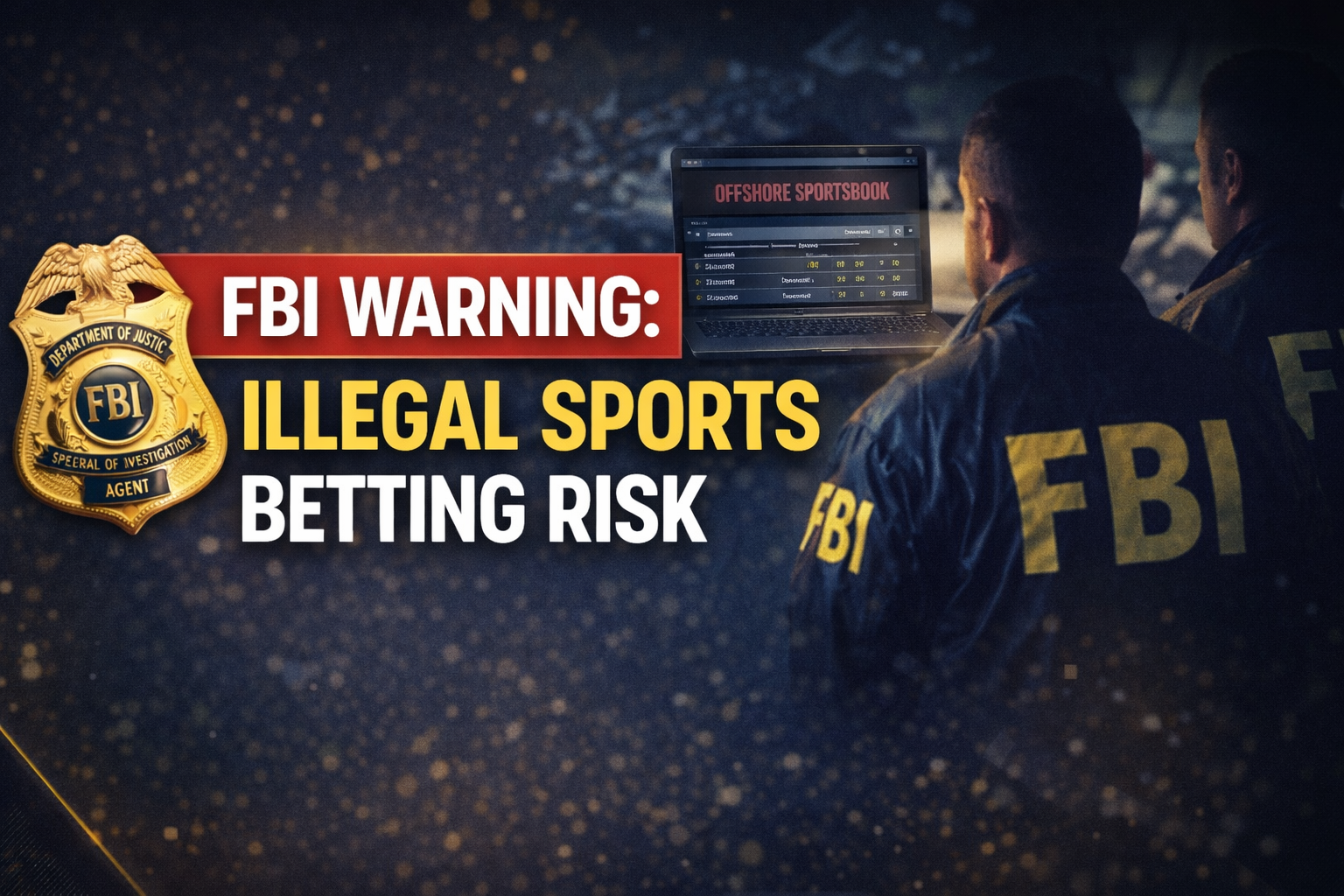
    As legal sports betting expands across the United States, federal authorities are urging caution. The Federal Bureau of Investigation (FBI) warns that illegal gambling remains widespread and dangerous, despite growing legalization.

    Sports wagering is now legal in 39 states and Washington, D.C. Yet millions of Americans continue to place bets on illegal platforms.

    Illegal Gambling Still Attracts Massive Bets

    According to estimates cited by the FBI, Americans wager more than $673 billion each year through illegal or unregulated betting channels. These include offshore sportsbooks, online casino-style games, and unauthorized gaming machines.

    Many of these platforms operate outside U.S. laws. They often target American bettors through deceptive marketing and misleading websites.

    Offshore Sites Create False Trust

    Federal officials say offshore gambling sites frequently disguise their foreign operations. These platforms present themselves as legitimate U.S.-based services.

    This deception creates a false sense of security. Bettors may believe consumer protections apply when they do not.

    In a public alert, the FBI stated that illegal gambling “poses significant risks to the American public and the integrity of the U.S. betting market.”

    Links to Organized Crime

    Authorities warn that illegal gambling often funds organized crime. Criminal groups use betting proceeds to support activities such as drug trafficking, human trafficking, and weapons smuggling.

    By using illegal platforms, bettors may unknowingly contribute to these operations.

    Serious Risks for Bettors

    Illegal gambling also puts individual players at risk. These platforms offer no guarantees on payouts or fund protection.

    Bettors have no legal recourse if operators refuse to pay winnings. In extreme cases, unpaid debts have led to threats, extortion, or violence.

    The FBI also warns that gambling winnings from illegal platforms could expose players to tax violations or money laundering charges.

    How Bettors Can Protect Themselves

    Legal sportsbooks operate under strict state oversight. Regulators publish approved operator lists for each state.

    Licensed platforms clearly display authorization seals and follow consumer protection rules. The FBI urges bettors to verify licensing before placing any wagers.

    A Persistent Threat Despite Legalization

    Despite expanded regulation, illegal gambling remains a serious concern. Federal authorities stress that responsibility ultimately lies with the bettor.

    The FBI’s message is clear: If the odds look too good to be true, the risk probably is.

  • £260 Million Payday: Bet365 Boss Denise Coates Bags Massive Payout Despite Profit Slump

    £260 Million Payday: Bet365 Boss Denise Coates Bags Massive Payout Despite Profit Slump

    Bet365 founder and co-chief executive Denise Coates has secured a staggering £260 million-plus payout, reinforcing her status as one of the highest-paid executives in the UK, even as profits at the gambling giant fell sharply.

    Newly filed accounts show that Coates received a £104 million salary for the year to March, alongside a massive dividend windfall after Bet365 tripled cash dividends to family shareholders. With her majority stake in the privately owned business, Coates was entitled to at least half of the £313.6 million dividend payout, pushing her total annual earnings to more than £260.8 million — a 65% jump from the previous year.

    The payout once again puts Coates far ahead of Britain’s top corporate earners. Her annual income comfortably eclipses that of other high-profile executives and adds to an extraordinary £2.7 billion she has taken home from Bet365 over the past 15 years. In 2020 alone, she received a record-breaking £421 million.

    The eye-watering payday comes despite a notable dip in profitability. Bet365 reported pre-tax profits of £338.5 million, down 43% year-on-year, although revenue climbed to £4.03 billion, highlighting the company’s continued scale and global reach.

    Coates’ latest earnings were secured before the UK government moved to hike gambling taxes, with Chancellor Rachel Reeves increasing levies on remote betting and online gaming. Rival operators have already warned of potential hundreds of millions of pounds in additional costs from the changes.

    Founded more than two decades ago, Bet365’s rise is legendary. Coates famously ran the business from a Portakabin in a Stoke-on-Trent car park, buying the Bet365 domain from eBay and persuading her father to mortgage his bookmakers to fund the online venture.

  • Paddy Power and Betfair Agree £2M Settlement Over Gambling Safety Failures

    Paddy Power and Betfair Agree £2M Settlement Over Gambling Safety Failures

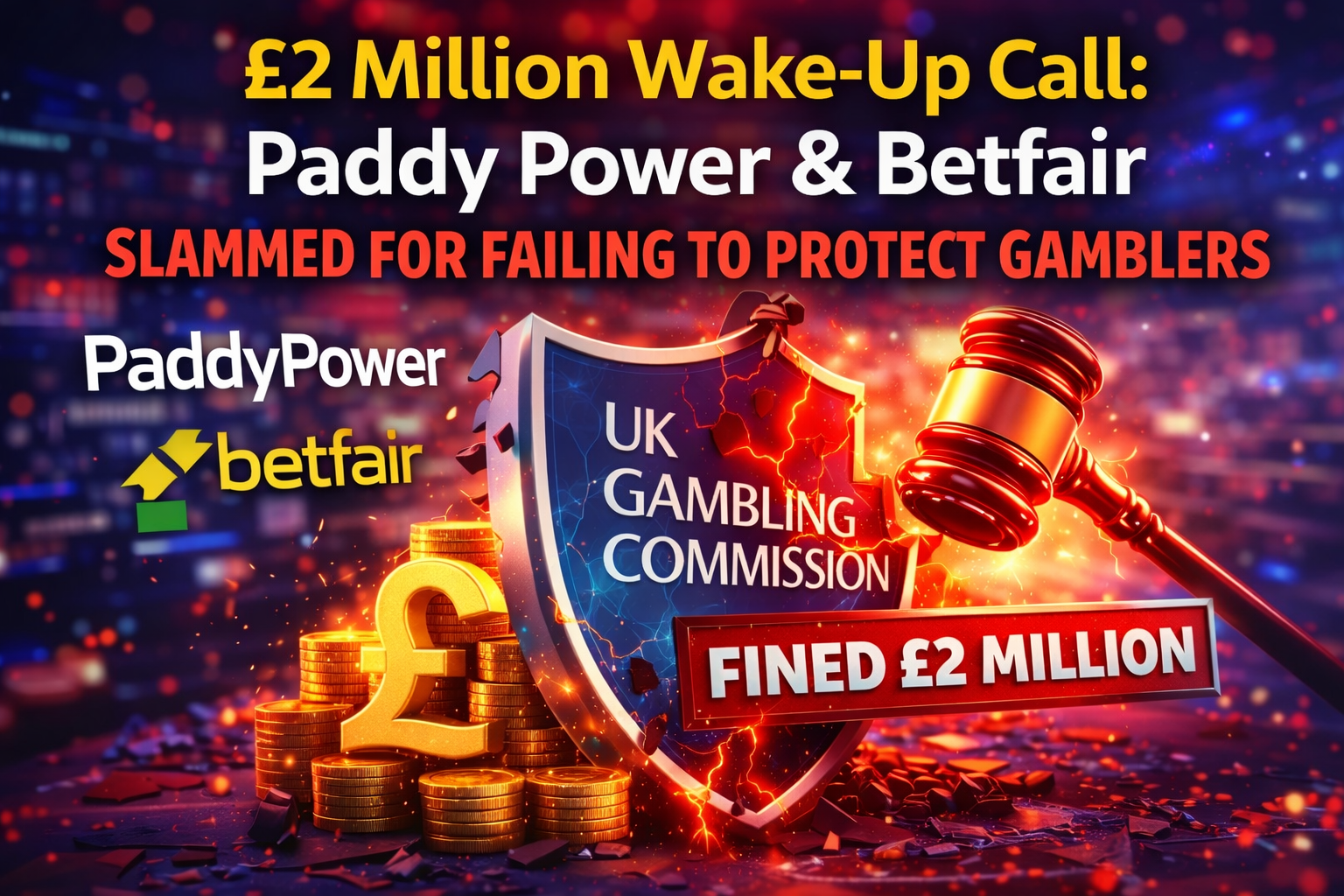
    Britain’s gambling watchdog has landed a major blow on Flutter Entertainment’s online arm, ordering Paddy Power and Betfair to pay a £2 million settlement after finding serious failings in how the operator protected customers from harmful gambling behaviour.

    Shocking examples — and why the commission acted

    A routine compliance review uncovered alarming cases. In one instance, a single customer staked £86,000 over 16 days, losing £6,000 before a manual review was carried out. In another, a punter placed more than 300 bets totalling roughly £20,000 in under eight hours — activity that, regulators say, should have triggered earlier intervention. These lapses formed part of the Gambling Commission’s evidence that customer-protection systems were not sensitive enough.The commission criticised delays in monitoring and called the failings “unacceptable.” It emphasised that firms must spot rapid increases in stakes, overnight play and changing betting patterns — and act quickly to protect vulnerable customers.

    Not Flutter’s first brush with the regulator

    This is not Flutter’s first regulatory headache. In 2023 the company paid a smaller penalty after promotions were sent to self-excluded customers. The recurrence has intensified scrutiny on whether large operators are keeping pace with best-in-class safer-gambling tools.

    Operator response and claimed fixes

    Flutter stressed it takes player safety “incredibly seriously” and pointed to upgrades it has made, including the roll-out of a real-time safety platform and tightened monitoring. The company said it cooperated with the probe and that it has taken steps to prevent similar incidents in future. However, the Gambling Commission made clear that improvements after the fact do not excuse the original failures.

    Wider implications for the industry

    Regulators and campaigners say this case sends a clear message: mere tick-box compliance won’t cut it. As online betting grows, so do the risks — and operators must invest in tech and people to spot harm earlier. Critics argue the industry still relies too heavily on automated flags and not enough on timely human review.For players and the public, the headline figure — £2 million — is eye-catching. Yet experts note that the reputational damage, and potential for stricter oversight, could cost operators far more over the long run in lost trust and tighter rules. Moreover, the case could spur faster policy moves on customer protection, monitoring standards and the responsibilities of global betting firms in regulated markets.

    What’s next?

    The Gambling Commission will continue to monitor compliance across the sector. Meanwhile, operators are under pressure to show not only upgraded systems but demonstrable results: earlier detection, swifter contact with at-risk customers, and clearer evidence that interventions actually reduce harm.

    This ruling may be just the start of a tougher regulatory era. For players affected by gambling harm, it’s a long-overdue reminder that stronger safeguards are essential — and for firms, a warning that surveillance gaps will no longer be tolerated.

  • ITV Enters UK iGaming Market With Slot-Focused Casino Platform

    ITV Enters UK iGaming Market With Slot-Focused Casino Platform

    ITV Expands into Online Gaming

    UK commercial broadcaster ITV has confirmed plans to enter the online gaming market with the launch of a new online casino and bingo platform. The new offering is expected to fully launch in early 2026, following an imminent soft launch.

    To support this expansion, ITV has partnered with Richmond Atlantic and Gaming Innovation Group (GiG). The move marks a major step for ITV as it broadens its digital entertainment portfolio beyond traditional broadcasting.

    ITV Win to Be Rebranded as ITV Win Bingo & Spins

    As part of the rollout, ITV will rebrand its existing competition platform, ITV Win, as ITV Win Bingo & Spins. Previously, ITV Win focused solely on prize draws and competitions.

    Richmond Atlantic, a Gibraltar-based operator, will integrate the new gaming functionality into the platform. Meanwhile, GiG will provide the technology to power both the casino and bingo products.

    Slot-Led Casino Offering

    The casino section of ITV Win Bingo & Spins will focus primarily on slot games. This will include a mix of well-known titles alongside exclusive branded content, designed to appeal to a broad UK audience.

    According to ITV, the platform is currently in the final stages of development. A soft launch is expected shortly, followed by a full nationwide rollout in the new year. The launch will also be supported by a major television advertising campaign.

    Richmond Atlantic Calls Deal a “Milestone Moment”

    Richmond Atlantic is a newly formed venture led by CEO Adam Joseph, who previously served as CEO of Eyas Gaming. Joseph also held senior roles at Rank Group, Bodog Nation, and Betfair.

    The company secured the ITV partnership through a competitive tender process.

    “This is a milestone moment for Richmond Atlantic and one that will redefine the iGaming landscape in the UK,” Joseph said. He added that the company is focused on delivering a safe, engaging, and responsible gaming experience for ITV’s audience.

    Broadcasters and Gambling: A Familiar Path

    ITV is not the first UK broadcaster to enter the gambling space. Sky Bet was launched in 2001 following BSkyB’s acquisition of the Sports Internet Group. The Sky gambling brands were later acquired by Flutter Entertainment in 2020.

    Similarly, radio broadcaster talkSPORT operates talkSPORT Bet in partnership with BetVictor. In addition, BV Gaming runs Heart Bingo under licence from Global Media Group Services.

    With its strong brand recognition and marketing reach, ITV’s entry could significantly reshape competition within the UK iGaming market.

  • New Jersey iGaming Nears Record High as Online Casinos Power Market Momentum

    New Jersey iGaming Nears Record High as Online Casinos Power Market Momentum

    December 2025

    New Jersey’s iGaming market delivered another blockbuster performance in November, reinforcing the state’s position as one of the most powerful online casino jurisdictions in North America. Online casino and poker revenue surged to $253 million for the month, marking an 18.2% year-on-year increase and putting the sector within touching distance of its all-time record.

    The November result came just 2.8% below October’s historic peak of $260.3 million, underlining the sustained strength of online casino demand in the Garden State. As traditional casino floors face seasonal fluctuations, iGaming continues to prove itself as the most reliable and fast-growing vertical in New Jersey’s regulated gaming ecosystem.

    Online casino games drive the surge

    The bulk of November’s iGaming success was fueled by online slots and table games, which generated $250.8 million in revenue. This represented a robust 18.5% increase compared to November last year, highlighting strong player engagement across digital casino titles.

    Internet poker was the only sub-sector to show a decline, slipping 4.6% year-on-year to $2.2 million. However, poker’s modest dip did little to slow the overall momentum, as online casino games continued to dominate player spending.

    Market leaders tighten their grip

    Competition at the top of New Jersey’s iGaming market remained intense, with major brands consolidating their leadership positions. FanDuel, in partnership with Golden Nugget, once again led the market, posting $60.2 million in revenue for November.

    Close behind, DraftKings and Resorts World secured second place with $49.6 million, while BetMGM and Borgata rounded out the top three at $30.6 million. The performance of these operators reflects both brand strength and continued investment in product innovation, game variety, and player experience.

    A record-setting year in sight

    With eleven months now complete, New Jersey’s iGaming revenue has reached $2.64 billion year-to-date, representing a striking 22.2% increase compared to the same period last year. The figures point to a potential record-breaking finish for 2025, as online casino gaming cements itself as the primary growth engine of the state’s regulated gambling market.

    As player preferences continue to shift toward digital-first entertainment, New Jersey’s iGaming sector is not just growing—it is redefining what success looks like in the modern gaming industry. If current trends hold, the state’s online casinos are poised to close the year on an unprecedented high, setting new benchmarks for regulated iGaming in the US.

  • DraftKings Bombshell: Co-Founder Matt Kalish Quits as President – Epic Shift Ahead!

    DraftKings Bombshell: Co-Founder Matt Kalish Quits as President – Epic Shift Ahead!

    DraftKings faces a huge shake-up. Co-founder and president Matt Kalish will leave his executive role on March 31, 2026. He stays on the board, though. This is the company’s first big leadership change since 2012.

    Why the Big Change?

    An SEC filing shows the decision came this month. Both sides agreed on it. DraftKings now enters a fresh phase. They plan to expand into prediction markets.CEO Jason Robins praised Kalish. “Matt has been my key partner with Paul Liberman,” Robins said. “He built DraftKings from the start. His impact is huge. I’m glad he stays until March. He’ll keep guiding us on the board.”

    Kalish leaves after a $10 million NFT settlement this year. But DraftKings pushes forward. They focus on new gaming products and media deals.

    The Exciting New Platform

    Meet “DraftKings Predict.” This targets hot prediction markets. DraftKings bought Railbird Technologies for $48.6 million. It’s CFTC-regulated. They paid in cash and stock. Up to $200 million more could follow.Robins is bold. “We won’t miss this chance,” he said on an earnings call. “We’ll compete and win.” They offer sports contracts in non-betting states. Regulators approve this.

    Mega Media Partnerships

    DraftKings scored big with ESPN. It’s a multi-year deal. DraftKings becomes the official sportsbook starting December 1.ESPN’s Jimmy Pitaro loves it. “This boosts our betting experience,” he said.They also teamed up with NBCUniversal. That’s for ads. DraftKings commits $1.3 billion over five years.The board expanded share buybacks. It went from $1 billion to $2 billion. They already bought 9.3 million shares.

    Financial Snapshot

    Third-quarter revenue hit $1.14 billion. It missed the $1.21 billion forecast. Adjusted EBITDA showed a $126.5 million loss. EPS was -$0.26.Full-year guidance dropped. Revenue now at $6 billion, down 5%. EBITDA at $500 million. Blame goes to bad sports results. That cost over $300 million.Robins stays positive. “Our growth speeds up,” he told analysts. “The future looks bright.”Monthly unique payers: 3.6 million, same as last year. Revenue per player: up to $106 from $103.NBA bets rose 19%. NFL bets up 13%. October sportsbook handle jumped 17%.

    Analyst Buzz and Long-Term Wins

    Analysts see growth in prediction markets. Barry Jonas from Truist Securities calls it a key driver. It’s in the 2025 guidance.DraftKings started as fantasy sports. The 2018 Supreme Court ruling changed everything. Now it’s a $15 billion leader. It battles FanDuel.With Kalish’s move, new eras begin. Prediction power and media wins are key. The stakes are high. DraftKings bets on victory. Watch this space!