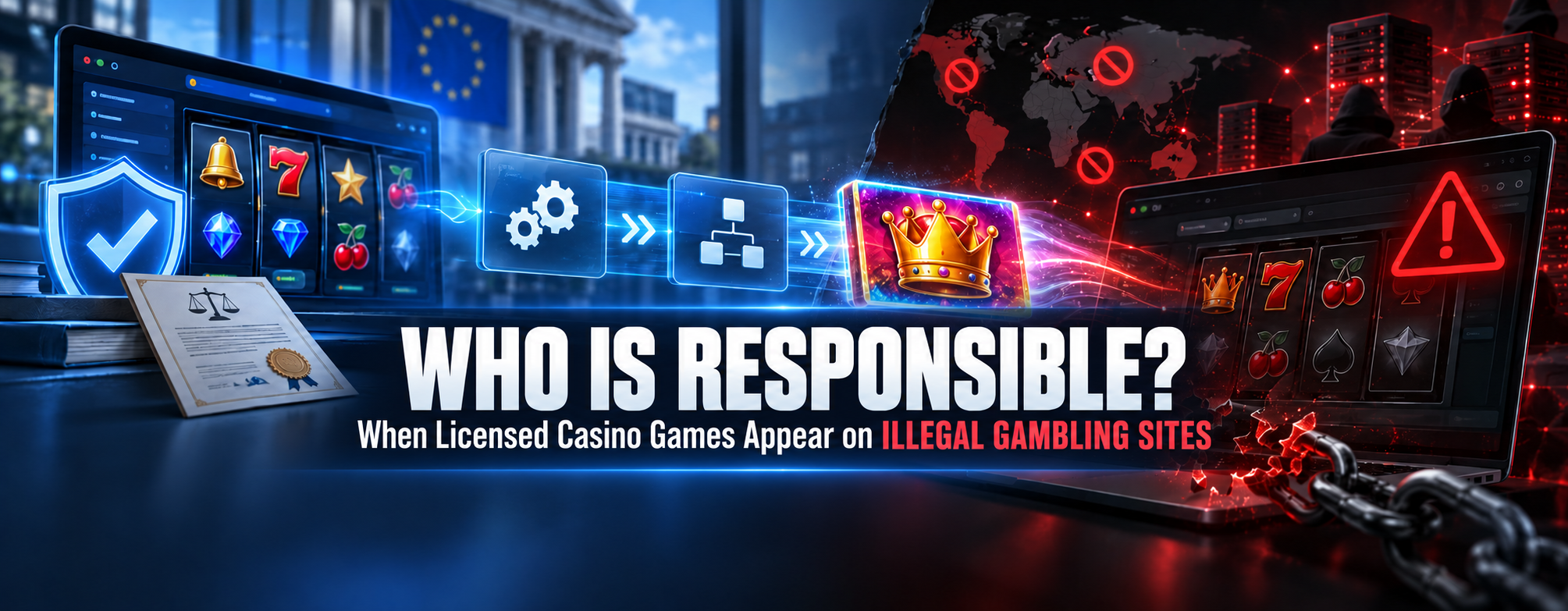
The global iGaming industry operates through a complex distribution chain involving game studios, aggregators, platform providers, resellers and online casino operators. But when a licensed casino game appears on an illegal or unregulated website, who should ultimately be held responsible?
Traditionally, game suppliers argued that their responsibility ended after providing certified content to an approved operator or distributor. However, regulators are increasingly rejecting this hands-off approach.
Regulators Expect Proactive Monitoring
The UK Gambling Commission has warned that games from licensed suppliers have appeared on illegal gambling websites—sometimes after being distributed by third-party resellers in breach of contractual agreements.
Its message to B2B suppliers is clear: contractual restrictions alone may no longer be enough. Suppliers are expected to actively examine their distribution networks and take steps to prevent licensed content from reaching unlawful operators.
This may require game providers to introduce stronger controls, including:
- Domain and operator monitoring
- Regular audits of aggregators and resellers
- Geographic blocking technology
- Immediate content-disconnection procedures
- Enhanced due diligence for cryptocurrency operators
- Clear reporting and escalation systems
The Distribution Problem
A single casino game can pass through several businesses before reaching players. A developer may supply the content to an aggregator, which integrates it with multiple platforms. Those platforms may then distribute the game to hundreds of casino brands.
This structure allows suppliers to scale quickly—but it can also make it difficult to identify where their games are ultimately being offered.
The Malta Gaming Authority classifies supplying and managing essential gaming products as a regulated B2B activity through its Critical Gaming Supply licence. Meanwhile, the UK requires gambling software offered through licensed online casinos to meet defined technical and testing standards.
Operators Cannot Escape Responsibility
Online casino operators also carry significant obligations. In regulated markets, they must ensure their technology providers, affiliates and other third parties comply with applicable licensing conditions.
The UK Gambling Commission states that licence holders remain responsible for third parties performing activities connected to their licensed business.
Therefore, responsibility cannot be placed entirely on either the supplier or the casino. Effective compliance requires oversight throughout the complete distribution chain.
Compliance Is Becoming a Competitive Advantage
As regulated iGaming expands, suppliers may be judged not only by their games, mathematics and technology—but also by the markets in which their products appear.
Providers with transparent distribution records, strong monitoring systems and carefully controlled partnerships will become more attractive to licensed operators. Those that cannot demonstrate where their content is available may face regulatory scrutiny and reputational damage.
The industry’s next major challenge is not simply developing better games. It is ensuring those games reach the right players through the right operators in legally permitted markets.
For the latest iGaming developments, casino insights and industry analysis, stay updated with www.slotsbuzz.io.
Leave a Reply